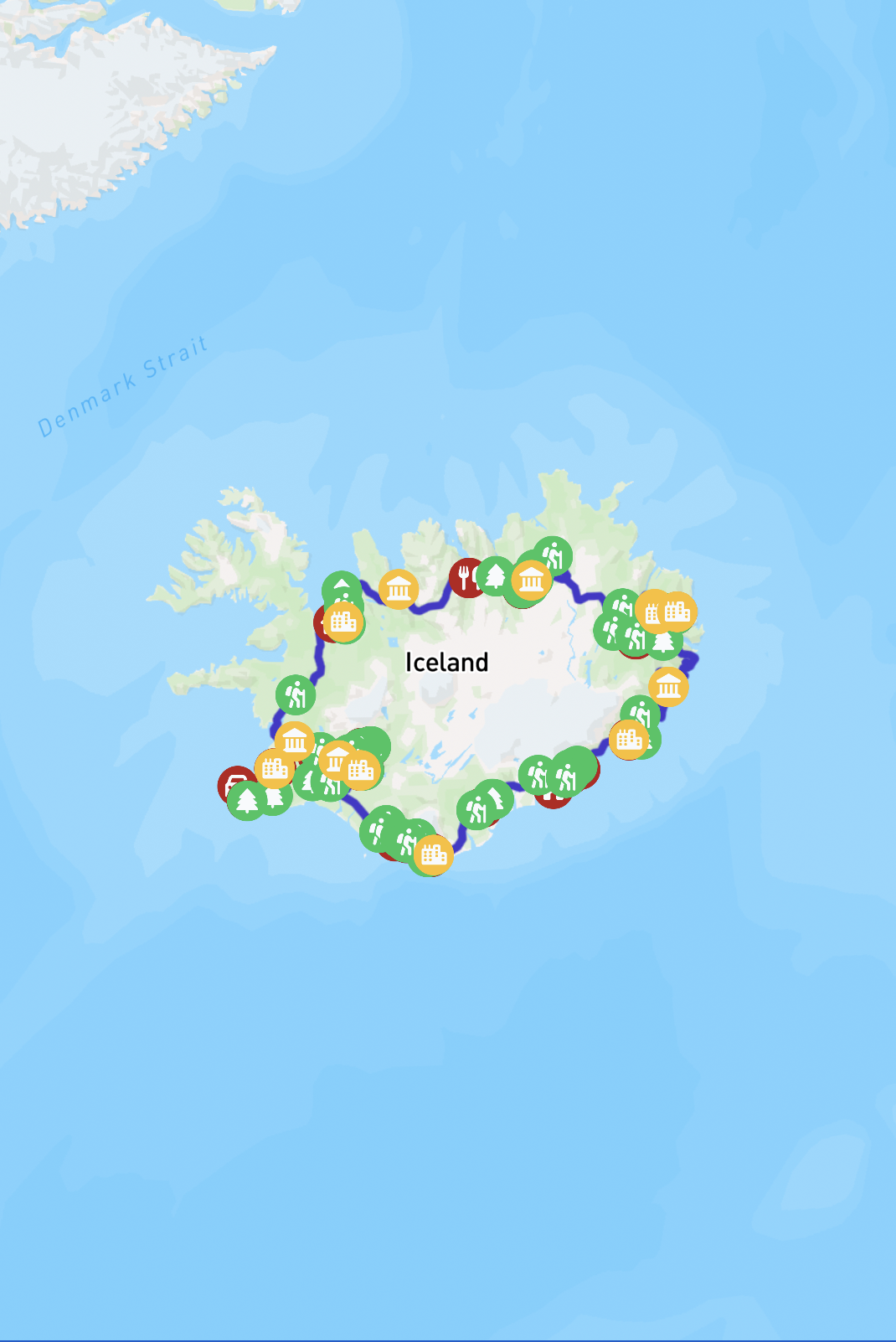
Ring road, Iceland

5.00
1 review
Iceland: Glaciers, lakes, forests, and more. A land of diverse landscapes, from majestic glaciers to volcanic wonders. Waterfalls, black sand beaches, and geothermal hot springs await. Rich history, vibrant culture. Awe-inspiring adventures at every turn.
- Days9
- Distance2,223 km
- Spots81
- IntensityIntense
Full route
- Keflavík - Holmsberg lighthouse - Blue Lagoon - Kleifarvatn - Reykjavík
- Reykjavík - Thingvellir National Park - Laugarvatn Fontana - Kerid Crater - Geysir - Gullfoss Falls - Brúarfoss - Flúðir
- Flúðir - Urriðafoss - Seljalandsfoss - Gljufrabui - Nauthúsagil - Skógafoss - Kvernufoss - Sólheimajökull - Dyrhólaey - Vik
Our to-do list
- Experience the active light guiding at the Holmsberg lighthouse (Day 1)
- Immerse yourself in relaxation at the mineral-rich Blue Lagoon (Day 1)
- Engage with the Scandinavian culture in Reykjavík (Day 1)
Interesting places we didn’t visit
- Whale watching https://reykjaviksailors.is/
- Grótta Island Lighthouse (Reykjavík) - A historic lighthouse located on a small island off the coast of Reykjavik, offering stunning views of the surrounding area.
- Maríuhellar (Reykjavík) - A beautiful, tranquil spot located near the sea in Reykjavik, known for its stunning rock formations and picturesque views.
- Distance111 km
- Spots5
Holmsberg Lighthouse
Perched on Iceland’s rugged coastline since 1929, Holmsberg Lighthouse is a historic beacon offering a captivating glimpse into the country’s maritime heritage.
Photography Tips: Capture the lighthouse during sunrise or sunset for stunning photos. Check the weather forecast, dress in layers, and visit during quieter times for a more intimate experience.
Blue Lagoon
”Immerse yourself in the otherworldly waters of the Blue Lagoon, a geothermal spa surrounded by volcanic landscapes”. It’s was Formed in 1976, it invites relaxation amid stunning natural contrasts and is known for its skincare benefits.
Tip: Book tickets in advance, visit during off-peak hours, try the face mud mask, and bring a waterproof phone case. Don’t forget to moisturize after your dip.
Kleifarvatn
It’s a perfect quick stop on the way back to Reykjavík. Kleifarvatn is the largest lake on the Reykjanes Peninsula. Set against steaming vents and lava fields, its geological history, shaped by seismic activity, makes it a captivating stop.
Tip: Explore surrounding geothermal areas, dress warmly, and consider bringing binoculars for bird watching.
- Distance232 km
- Spots10
Thingvellir National Park
Established as Iceland’s first national assembly site in 930 AD, Thingvellir National Park is a UNESCO World Heritage site. Delve into its historical significance and geological wonders, including the Silfra Fissure between tectonic plates. Because of this crack, Iceland grows by 2 cm every year.
Tips for Exploration: Consider a snorkeling adventure in Silfra for a unique experience between tectonic plates. Swimming there you can literally touch two continents simultaneously
Kerid Crater
Formed 3,000 years ago, Kerid Crater is a captivating volcanic crater lake with red walls. Discover its unique natural beauty during the golden hour, enhancing the hues of the surrounding landscape.
Capture the Moment: best time for visiting is during sunset, and bring your camera to capture the vibrant colors and play of light and shadows.
Geysir
Explore the geothermal marvels of Geysir, the original geyser, and witness the regular eruptions of Strokkur. Opt for an early visit to enjoy Strokkur’s eruptions before the crowds arrive. Historically, Geysir has been less predictable and less active compared to its nearby counterpart, Strokkur. While Strokkur erupts more regularly (approximately every 5-10 minutes), Geysir’s eruptions have been less frequent and sometimes irregular.
Gullfoss Falls
Gullfoss, the “Golden Falls,” is a majestic two-tiered waterfall on the Hvítá River.
Tip: I can recommend taking a raincoat as it may splash water on you.
Brúarfoss
Hidden along scenic trails, Brúarfoss enchants with its vibrant blue water. Embark on a short hike to discover this secluded gem, wearing sturdy hiking boots for the picturesque journey.
Tip: do not forget a waterproof camera, and download Parka app to pay for parking.
Laugarvatn Fontana
Rejuvenate at Laugarvatn Fontana, a geothermal bath and wellness center overlooking Lake Laugarvatn. Opt for early morning or late evening sessions for a tranquil experience amid stunning natural surroundings.
Authentic Culinary Experience: Try geysir bread, a traditional Icelandic treat baked using the natural geothermal heat from hot springs.
Flúðir
Discover Flúðir’s historic Secret Lagoon, Iceland’s oldest hot spring, amidst sustainable agriculture. Take a guided tour of greenhouses to learn about eco-conscious farming practices.
Sustainable Exploration: Immerse in the blend of geothermal activity and Icelandic landscapes while supporting sustainable initiatives. And reserve tickets for Secret Lagoon in advance. The slot must be booked in advance, but they say that it is not very reliable.
- Distance201 km
- Spots12
Tip for visiting all waterfalls: to fully enjoy the experience without getting soaked, consider wearing waterproof clothing, boots, a rain jacket, and waterproof footwear. Bringing a waterproof camera cover or a protective case for electronic devices is also advisable.
Urriðafoss
Urriðafoss, the most voluminous waterfall in Iceland, is situated in the Þjórsá River, the country’s longest river. Its vast width and roaring cascades make it a spectacular sight.
Seljalandsfoss
Seljalandsfoss, a captivating waterfall near Eyjafjallajökull, beckons photographers and adventurers with its unique behind-the-falls walk.
Gljufrabui
Hidden within a canyon, Gljufrabui is a secluded gem, perfect for those seeking an off-the-beaten-path waterfall experience.
Tip: To find it, simply go down the stairs, wade across a small stream for 10 meters, and there it is!
Nauthúsagil
Nauthúsagil, a gorge known for its rowan tree growth despite harsh conditions, features a small waterfall and offers a unique hike requiring walking through a stream.
Skógafoss
Skógafoss, noted for its dramatic drop and often-present rainbows, is one of the biggest waterfalls in the country. Legend says that the first Viking settler buried a treasure in the cave behind this waterfall.
Tip: Climb the stairs for a panoramic view.
Kvernufoss
Nestled in a serene valley, Kvernufoss is a fairy-tale-like waterfall tucked away in a beautiful green gorge, near Skógafoss. A trail allows visitors to walk behind its cascade.
Tip: The best time for photography is midday, when the sun illuminates the valley.
Sólheimajökull
Sólheimajökull, a glacier tongue extending from the great Mýrdalsjökull, reveals Iceland’s glacial beauty and geological history.
Tip: Join a guided glacier hike to delve deeper into Sólheimajökull’s geological wonders and gain a more comprehensive understanding of Iceland’s frozen landscapes.
Dyrhólaey
A small peninsula, or promontory, located on the south coast famed for its stunning views and an impressive rock arch that extends out into the sea.
Coastal Drama and Avian Abundance: Ascend Dyrhólaey for panoramic views of black sand beaches and dramatic cliffs, especially during the nesting season for vibrant birdlife.
Vik
The southernmost village in Iceland, known for its beautiful black sand beaches, impressive rock formations, and the charming wooden Reyniskirkja church.
- Distance188 km
- Spots10
Reynisfjara Beach
Famous black-sand beach in Iceland near Vík í Mýrdal, featuring basalt columns and Reynisdrangar sea stacks, steeped in Icelandic folklore as trolls turned to stone.
Tips: Heed warning signs and keep a safe distance from the ocean; waves can be unpredictable.
Víkurfjara Black Sand Beach
Located close to the town of Vik, this black sand beach offers stunning views of the Atlantic Ocean and the surrounding cliffs, including the iconic Dyrhólaey promontory.
Tips: Visit during the evening for captivating sunset views over the ocean.
Fjaðrárgljúfur
Stunning canyon in Iceland with a winding river, believed to have formed during the Ice Age due to progressive erosion.
Tips: Wear sturdy hiking boots for the trail and capture the canyon’s beauty from various viewpoints.
Foss á Síðu
We didn’t stop intentionally, but we briefly looked out of the car to look at it.
Dverghamrar
Collection of unique rock formations near Vík, steeped in Icelandic folklore as petrified dwarves. Dverghamrar, known for peculiar rock formations, is an intriguing destination for those interested in mythical tales and unique geological features.
Fossálar Waterfall
Lesser-known gem near Vík, offering a serene atmosphere, perfect for visitors seeking the quieter side of Iceland’s natural wonders.
Svartifoss
Waterfall in Vatnajökull National Park known for its basalt column surroundings, inspiring architectural designs.
Tips: Wear comfortable hiking gear and explore nearby hiking trails for more stunning views.
Skaftafell Glacier
Glacier in Vatnajökull National Park known for stunning ice formations, a paradise for nature enthusiasts exploring the wonders of Vatnajökull. The black colour of the glacier is primarily due to the presence of volcanic ash and debris.
Tips: Join a guided glacier tour to safely explore the ice formations and learn about the glacier’s unique features. There are many invisible deep cracks and possible rockfalls.
Svínafellsjökull Glacier
Glacier tongue in Vatnajökull National Park, captivating for those interested in glacial landscapes and photography. It’s slightly off the beaten track, but worth visiting. A glacier tongue was used as a filming location for scenes beyond the Wall in the popular television series Game of Thrones.
- Distance151 km
- Spots8
Múlagljúfur Canyon
Múlagljúfur Canyon is a hidden gem, less frequented by tourists compared to some other Icelandic attractions, offering a tranquil and less crowded experience for nature lovers.
Tip: This is quiet demanding trail, may take 40-60 minutes. And there is a fork early, follow the right side if you want to follow going along the canyon and see more pictiresque view.
Wear sturdy hiking shoes for a comfortable exploration of the canyon’s trails and take a drone for unforgettable views.
Fjallsárlón
Fjallsárlón is a glacial lagoon located at the southern end of the Vatnajökull Glacier in Iceland. Formed as a result of glacial retreat, Fjallsárlón is a relatively recent geological feature, and its history is tied to the ongoing changes in the country’s glacial landscapes.
Tip: Opt for a guided tour to uncover hidden corners and gain insights into the lagoon’s geological significance.
Breiðárlón
A lesser-known glacial lagoon near Jökulsárlón, filled with gleaming icebergs and surrounded by the Vatnajökull glacier’s ice cap, providing plenty of opportunities for spectacular photographs.
Jökulsárlón
Jökulsárlón is Iceland’s most famous glacial lagoon, formed by the retreat of the Vatnajökull Glacier. Its history is tied to the ongoing effects of climate change, resulting in the creation of a stunning lagoon filled with icebergs, providing a unique and constantly evolving landscape.
Tip: Bring a telephoto lens to capture the intricate details of the ice formations and the resident seals.
Stokksnes
Stokksnes is a headland on the southeastern coast of Iceland known for its black sand beaches and the iconic Vestrahorn mountain. While not historically significant, Stokksnes is a popular destination for photographers and nature enthusiasts.
Tip: Visit during sunrise or sunset for the best lighting and reflections on the black sand, creating a truly magical atmosphere.
Höfn
Höfn is a town in southeastern Iceland, historically known for its fishing industry. Today, it serves as a gateway for exploring the nearby Vatnajökull National Park and the stunning glacial landscapes of the region.
Tip: Check local seafood festivals for a taste of the town’s culinary delights and hospitality.
- Distance377 km
- Spots14
Skútafoss
Hidden in East Iceland, Skútafoss is a secluded waterfall surrounded by lush greenery, historically serving as a route for sheep migration.
Tip: There are two waterfalls, one is located a little further. Park at the end of the gravel road and walk 5 minutes and you’ll see a stunning little waterfall hidden away.
Hvannagil - The Golden Valley
Hvannagil, or The Golden Valley, captivates with its golden cliffs, a photographer’s dream, historically serving as a passage for travelers.
Tip: download one of trail app to find the suitable one in advance. Or park in the end of Grænahlíð, go to the red sand, make a circle and return to parking lot.
Gufufoss
A hidden waterfall near Seyðisfjörður that is one of the truly off-the-beaten-path attractions in East Iceland. It impresses with its powerful cascades, historically mirroring East Iceland’s dynamic forces, showcasing nature’s resilience.
Fardagafoss
An enchanting waterfall situated near the town of Egilsstaðir. Local folklore says that a hidden chest of gold lies behind it, guarded by the waterfall’s trolls.
Tip: there are two waterfalls, and the trail to the second one is slightly steep.
Hengifossarvatn
Iceland’s third-highest waterfall, Hengifoss, plunges 128 meters amidst vibrant landscapes. Adorned with captivating red and black basalt layers, it echoes Iceland’s geological history. The hike to Hengifoss is longer and higher than anticipated, taking about 1 hour from the parking lot. Litlanesfoss, the first waterfall on the trail, surrounded by towering basalt columns, is often overlooked but stunning.
Vök Baths
Vok Baths, located on the shores of Lake Urridavatn, invites visitors to enjoy a unique geothermal bath. The pools offer panoramic views of the lake and surrounding mountains, providing a relaxing holiday in the heart of Iceland’s wilderness.
Tip: Booking your slot in advance is highly recommended.
- Distance313 km
- Spots11
Rjúkandi Waterfall
Hidden in Vatnajökull National Park, Rjúkandi Waterfall offers a remote retreat. Accessible through a moderate hike, it stands surrounded by moss-covered cliffs, providing a serene and intimate connection with Iceland’s natural beauty.
Stuðlagil
Stuðlagil, the Basalt Column Canyon, stands as a geological marvel. You’ve probably seen this turquoise river and basalt columns that are breathtaking.
Tip:
- The route to Stuðlagil Canyon is relatively easy, but there are two options. The first implies only a top view; you won’t be able to go down to the river. It’s a West side parking.
- The second option is quite labor-intensive, and it’s East side parking. In this case, you need to cross the bridge and walk along the coast for about 4 km. On the way you will come across a waterfall with basalt columns. The trail constantly winds through pastures, just try to stay close to the river bed and you will definitely not miss the canyon. We followed this path and it was amazing.
Dettifoss (West Side)
Located in Vatnajökull National Park, Dettifoss, the most powerful waterfall in Europe, offers a breathtaking view of the raw power of nature from its west bank. The average water flow of Dettifoss waterfall is 193 cubic meters per second! And in Icelandic Dettifoss means Raging Waterfall. It has been featured in various films, including the opening scene of the 2012 science fiction film “Prometheus” directed by Ridley Scott as the origin of life on Earth.
Krafla
Krafla is a volcanic caldera in Iceland, known for its surreal landscapes, vibrant lava fields, and the iconic Víti crater. Caldera is filled with geothermal energy that is piped to the nearby power station, providing an amazing display of steam vents.
Hverir
Hverir is like stepping into another planet—super cool but brace yourself for the smell! Imagine bubbling mud puddles and steam shooting out of the ground; it’s a sight to remember, especially the steaming rock pile. They’ve got clear zones marked for where you can stroll, but watch out for those muddy spots if you’re rocking your fancy shoes.
Hverfjall Volcano Trail
Hverfjall, a massive tephra crater near Lake Mývatn, offers a challenging hiking trail along its rim. The volcano last erupted about 2,500 years ago, leaving behind a captivating landscape of ash and volcanic formations. Some people compare it with Krafla caldera.
Mývatn Nature Baths
Inspired by the Blue Lagoon, Mývatn Nature Baths offer a relaxing soak in mineral-rich geothermal waters. Surrounded by volcanic craters and lava formations, it’s a serene retreat providing a therapeutic experience in northern Iceland. Totally a must-stop if you’re cruising around Iceland.
Tip: Despite occasionally slippery floors, the baths are open year-round, and it’s advisable to bring your own towel and swimsuit, shower before entering, and stay hydrated for an optimal experience.
Skútustaðagígar
A cluster of pseudo-craters by Lake Mývatn, formed by gas explosions when boiling lava flowed over the wetlands. The area is protected as a natural monument and is a popular birdwatching site.
Tip: There are two trails from the carpark—one around the pseudocraters and a longer one leading to the lake and showcasing abundant birdlife.
- Distance368 km
- Spots8
Lava field Dimmuborgir
Dimmuborgir, translated as “Dark Cities,” is a surreal lava field near Lake Myvatn. These dramatic rock formations emerged when a massive lava lake hardened, creating a haunting landscape. Legend has it that it’s also home to Icelandic trolls.
Also it was used as a filming location for Game of Thrones. Specifically, Dimmuborgir served as the setting for the landscape Beyond the Wall in the North, depicting the area where Mance Rayder set up his camp.
Goðafoss Waterfall
Known as the “Waterfall of the Gods,” Goðafoss is a majestic cascade on the Skjálfandafljót River. In 1000 AD, chieftain Thorgeir Thorkelsson threw idols of Norse gods into the falls, symbolizing Iceland’s conversion to Christianity.
Divine Cascades Goðafoss, the “Waterfall of the Gods,” showcases its majestic horseshoe shape spanning 30 meters.
Glaumbær Farm & Museum
Immerse in Icelandic rural history at Glaumbær, a traditional turf farmhouse turned museum. Dating back to the 18th century, it showcases Iceland’s architectural heritage, offering insight into the country’s agricultural and cultural evolution.
Borgarvirki
Borgarvirki, a natural fortress atop a volcanic plug, dates back to the Settlement Era. Historically used for defense, it provides panoramic views of the surrounding landscape, blending nature’s marvels with ancient human ingenuity.
Hvitserkur
Hvitserkur, a striking basalt stack resembling a dragon, stands on the Vatnsnes Peninsula’s shores. Legend claims it was a petrified troll. Shaped by sea currents, this natural wonder invites exploration during low tide, revealing the intricacies of its captivating form against the coastal backdrop. You can be lucky to see seals starting from may.
Tip: Follow car park sign “access to beach” as the hike is not such steep as from the view point.
Kolugljúfur Canyon
Kolugljúfur Canyon captivates with its cascading waterfall, Kolufossar, surrounded by rugged cliffs. Named after the giantess Kola, legend has it that she once bridged the canyon with her enormous shoulders.
- Distance284 km
- Spots3
Glanni Waterfall
Hidden in the Westfjords, Glanni Waterfall is a mystical cascade with enchanting folklore. It’s a secluded wonder said to be inhabited by hidden beings, adding a touch of magic to its natural allure.
Hvammsvik Hot Springs
Hvammsvik Hot Springs, a geothermal oasis off the beaten path. Historically used by locals, these hot springs offer a tranquil retreat blending nature and relaxation seamlessly.
With eight pools of varying temperatures, a great sauna, and impressive views, this hot springs spot beats Blue Lagoon or Sky Lagoon. Whether you’re a couple or a group of friends, the fantastic amenities, including free lockers and a cafe, make it a must-visit during an Iceland road trip.
Reykjavík
We didn’t get to explore it on the first day, but we made up for it on the last. Iceland’s capital, Reykjavík, founded in 874 AD, seamlessly blends Viking heritage with modern cool. From the historic Hallgrímskirkja to the innovative Harpa Concert Hall, it offers a vibrant journey through time.
Viking Heritage meets Modern Cool: Take a walking tour, visit Hallgrímskirkja, and engage with locals at cafes for insider tips on lesser-known attractions.